Whole.


For the past four years, I have felt like there were two ‘me’s.’

There was the me that always was—

the one who was quiet but kind,

overthought everything I said,

craved time alone more than company.

The one who held more space for others’ opinions

than for my own thoughts about who I was.

I lacked boundaries,

yet kept everyone at a distance—

never sure how to protect myself

without shutting the world out.

I was exhausted and anxious,

trying to always know better,

please everyone,

be everything I thought I should be.

But then I moved—

to a country where nobody knew this “me.”

Without the weight of old expectations,

I saw myself more clearly than ever before.

With no familiar voices telling me who I was, 

I finally began to listen to myself.

And slowly, a new “me” began to emerge.

The me who is brave and soft,

who speaks with intention rather than perfection.

The one who craves quality time with the people I love,

and leaves with a smile on my face.

The one who looks inward for guidance

and accepts that not everyone will like what I find there.

I no longer keep people at arm’s length.

I let them see me, the real me—because now, I see myself too.

I am still kind, and sometimes quiet,

but now with strength and purpose.

I surprise myself with my resilience.

I have found a greater love for myself,

and through this, a greater capacity for loving others, too.

I feel overwhelming joy—

when I do yoga in the sunshine,

cook dinner for my friends,

sip coffee with my roommates,

laugh as I practice a new language.

I feel deep sadness, too—

when I go through a breakup,

miss my family back home,

feel lonely, or overwhelmed,

and sometimes for reasons I do not know.

For a long time, I believed that only the old me could exist in New York,

and the new me belonged to Israel.

As if I had to choose between them,

as if I could only be whole in one place.

But I see now that both have always been within me.

It was never about where I was—

it was about standing strong in who I am.

And once I did, the new me could exist anywhere.

When I say I have learned to love myself, 

I mean all of it.

The joyful, the sad, the excited, the heartbroken,

the strong, the fearful, the passionate—me

It was only once I accepted this—

that to love myself fully means one part is not more “me” than the other—

that I stopped feeling like there are two of me.

Wherever I am, whoever I’m with, whatever I feel—

I am whole

Because I am me.


Written by Jessica Bard.


The fear of being happy.

“It’s everything I’ve always wanted, and now I finally have it—but I’m afraid.”

With so many years—generations, even—between us, it’s hard to believe that the very thing I’ve been grappling with recently is exactly what my grandmother just said to me through the phone.

Things in my life were going well. Like, really well…almost too well. But as every piece of my life felt like it was falling into place, how did I feel? Terrified. I was utterly terrified of being so blissfully happy.

Was I really so scared of being happy, though?

No.

I was afraid of losing it.

I thought of the times I lost people, relationships, things that seemed “too good to be true.” I thought of the times I felt blindsided or empty when they were taken from me. I thought of how much it hurts to know what it’s like to feel pure joy, excitement, and love, only to lose it in the end.

So this time, my brain wanted to protect me. It came up with all the ways everything could blow up in my face. My brain told me to keep my guard up and close myself off from being too happy. All to prevent that pain from ever reaching me again.

By predicting any future pain I might feel, my brain might think it’s protecting me. Yet, in reality, all it’s doing is forcing me to live with pain that hasn’t even happened outside of my own mind.

And yet something far more destructive is happening when my brain does this, too. It’s preventing me from fully savoring all of the beautiful, joyful, loving moments that make life worth living. 

I like to think of my life sort of like a heartbeat. Picture the highs and lows of a line on a heartbeat monitor. It shoots up high, only to drop down low, only to go back up. Up and down. Up and down. Up and down. 

This visual helps me understand that as long as we feel joy, love and excitement, we will also feel sadness, heartbreak, and disappointment. The truth is that the more you open yourself up to good, the more you also risk a similar magnitude of pain. It’s simply the balance of life.

But the more we listen to the part of our brain trying to prevent the lows, the more we prevent the highs, too. And if you do that enough?

You’ll get a flat line. 

I don’t want to live a flat-lined life. The type of life where nothing ever truly penetrates some armor I’ve built around my heart; where everything feels just a little more dull. No—I want to experience every bit of joy, love and excitement the universe has to offer me, even if that means I feel the lows more deeply, too. 

Instead of focusing on the pain that I will inevitably face, I have to actively choose to focus on the highs of life.

After all—if pain is inevitable, doesn’t that mean joy is too?

So what choice do we have when our brains are telling us to run away and hide so that we never have to feel true pain? For this answer I’ll turn to another quote from my grandmother:

“Run with the good, and deal with the bad.”

In other words, we will stretch that joy, love, and excitement as far as it will reach. We will feel it deeply. We will revel in it. We will remember it. 

And it’s because of these highs that we will also have the strength to get through any sadness, heartbreak, and disappointment that might follow. When it reaches us, we will deal with it. We will survive it. We will grow from it. 

And when things start to look up–when that joy, love and excitement inevitably find us again–you bet we’re gonna run with it.


Written by Jessica Bard.

What Can We Learn From Trees?

Having patience when building this life for myself is no easy task. It requires acknowledging all the unknowns and waiting for my story to unfold, however it may.

When I moved to Israel, I knew I would have to practice patience. I knew it would take time to get a job, create a support system, develop routines–to feel somewhat stable here. Although I’m definitely feeling more settled two months later, I am nowhere close to having most of it figured out. I feel like all I’ve done so far is plant seeds, and I’m still waiting for the fruits of my labor to emerge. 

To practice patience in my aliyah process means more than just accepting the abnormally slow pace of Israeli bureaucracy. It means accepting that it’s okay if I don’t have my dream job quite yet. That I have some friends, but maybe not a core group. That I don’t have plans for every Friday night dinner. That I still have quite a bit left to figure out.

Being patient is difficult because it’s in those moments of in-between that messy feelings come up. The anxiety, the stress, the fear, the worry, the doubt. Am I doing the right thing? What’s taking so long? Did I do something wrong? Am I even worthy of…?

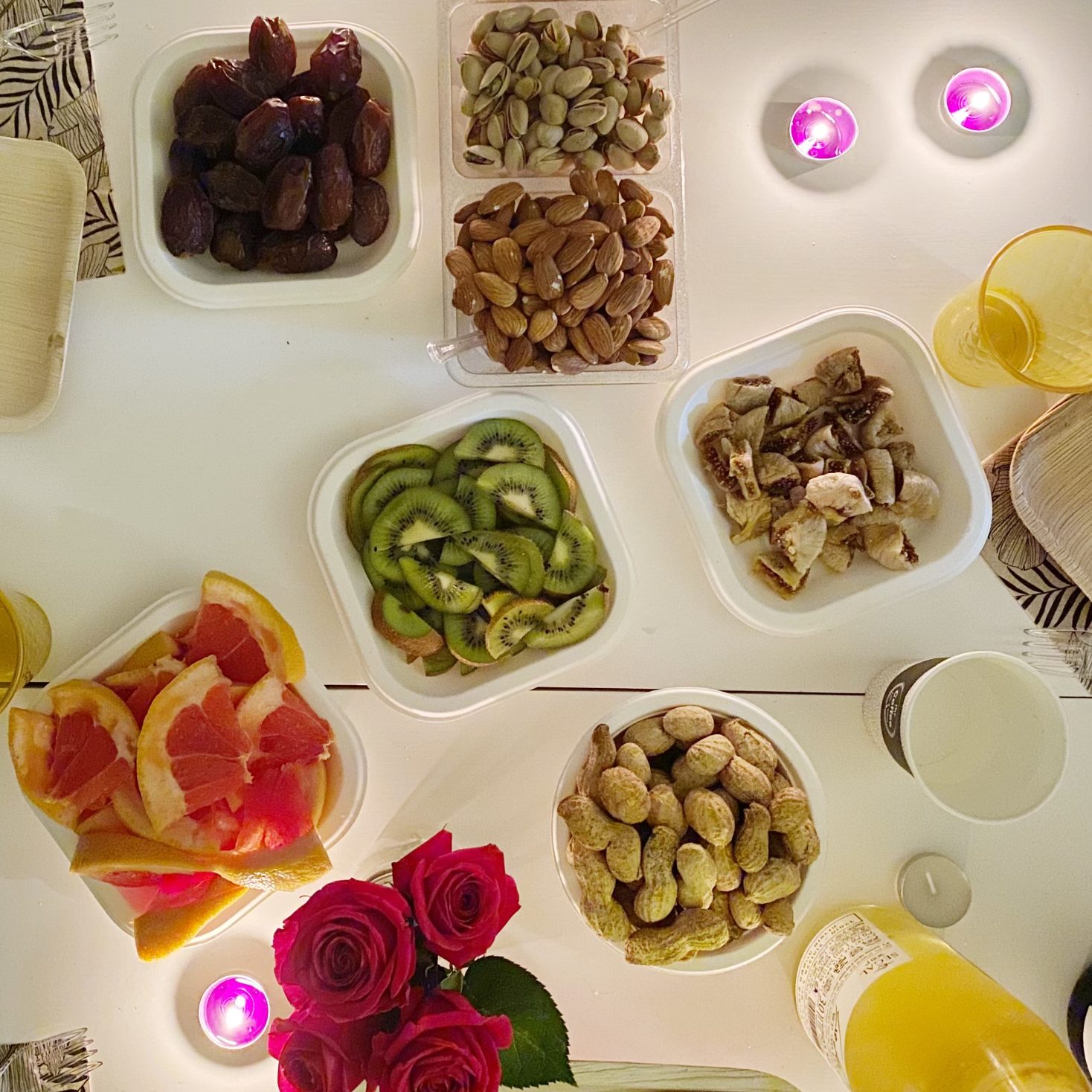
Coincidentally–or maybe not (is anything really a coincidence?)–the Jewish holiday of Tu B’shvat came around right as I’m having these thoughts. Tu B’shvat celebrates the birthday of trees, but on a deeper level, it’s all about spiritual and emotional growth.

It represents the potential that exists when you choose an environment, plant a seed, invest time and energy, and ultimately experience growth because of these choices.

Tu B’shvat lands in the middle of winter because it celebrates the potential; the unlimited ways in which this next year can unfold and deliver beauty. It teaches us that the darkness of winter is where growth happens; that light doesn’t just come after darkness–it exists within it. That this is where the most beautiful trees and gardens begin–with just a bunch of dirt and rain. The dirt, the rain, and a whole lot of love and patience, produce infinite possibilities for the future, and that is surely something to celebrate.

There are days when I get frustrated with the pace at which my life is moving. It’s slow, uncomfortable, and at times scary, and there’s no easy way out. I just have to live in it. I have to inch towards my future and keep watering my seeds. I have to stop comparing myself to people who started their gardens before I did or had different growing conditions. 

Slowly, slowly, roots will take hold and things will start to blossom. In the meantime, I will work on myself and my relationships. I will figure things out. My story will continue to unfold.

I just have to be patient. 

As the saying goes, good things take time. 

And maybe great things take a little bit longer 🙂


Written by Jessica Bard.